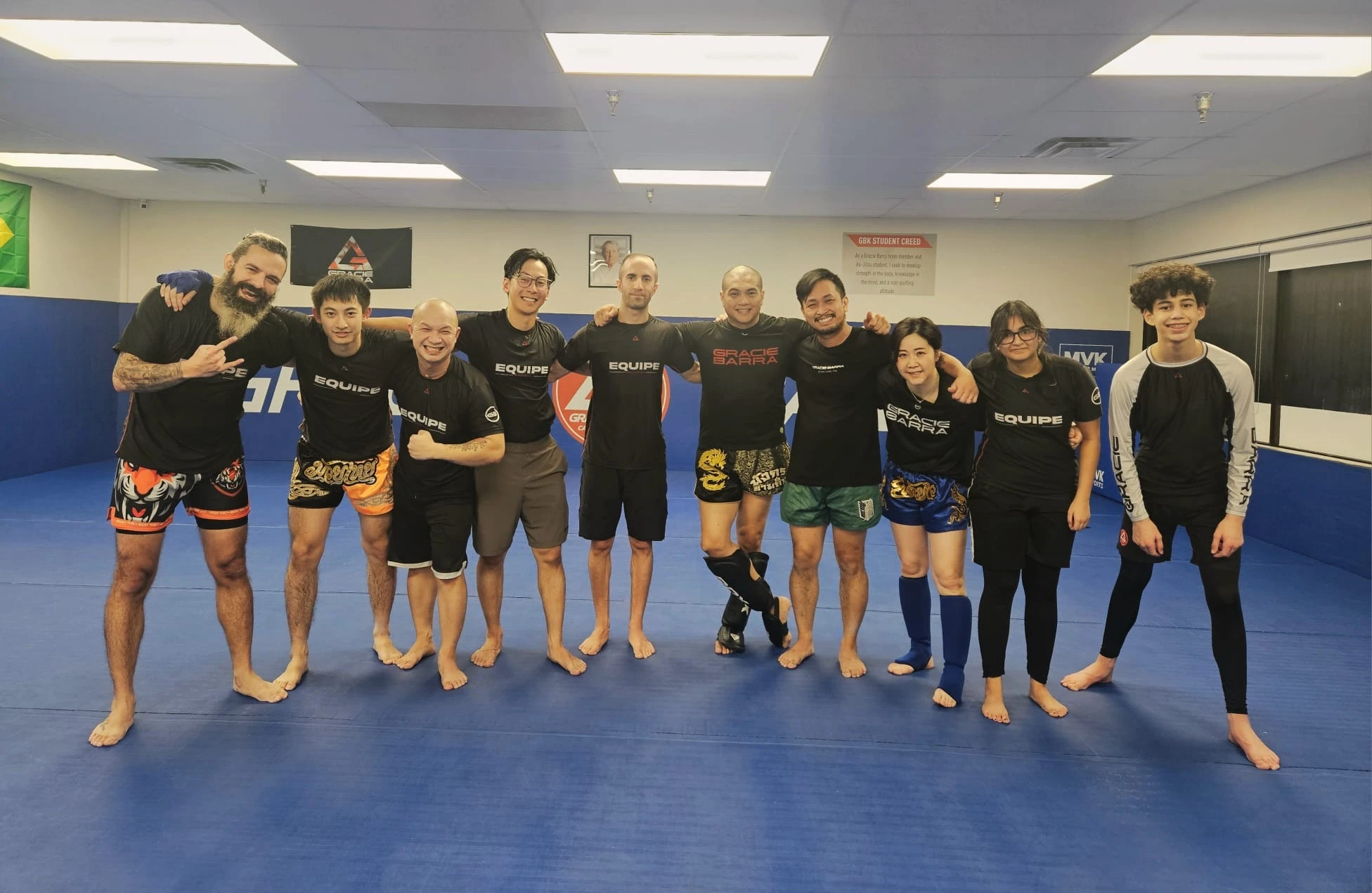
Can a Beginner Start BJJ and Muay Thai at the Same Time?
If you have been watching both styles and can't decide between them, training BJJ and Muay Thai together is a reasonable option, even as a complete beginner. The real question is not whether you can learn two arts at once. It is whether your week has room for both without turning every class into a struggle to keep up.
The two arts teach very different skills. Muay Thai is a striking art built on punches, kicks, knees and elbows, while Brazilian Jiu-Jitsu focuses on controlling a partner on the ground. At Gracie Barra Guildford, both are taught under the same roof, which makes combining them simpler, but it still helps to know what you are signing up for before you split your schedule.

DISCOVER Gracie Barra Guildford
CLICK HEREWhy the Two Arts Feel So Different in the First Weeks
Your first jiu-jitsu classes are mostly about learning positions you have never been in before: lying on your back with someone in your guard, or trying to stay balanced on top of a partner who keeps moving. In the GB1 Fundamentals program for new students, beginners work through positions, escapes and basic submissions with cooperative partners, so the early challenge is usually understanding, not toughness.
Muay Thai asks for something else. You stay on your feet, keep your hands up, and learn to throw combinations while managing distance. The Muay Thai program at the school uses pad work, heavy bag drills and partner training, and classes include high-intensity intervals, so the early challenge often feels more like conditioning and coordination.
Knowing this helps set expectations. A tough striking round and a confusing jiu-jitsu drill are two different kinds of hard, and feeling lost in one does not mean you are falling behind in the other.
What Happens When You Split Your Week Between Them
Most people who combine the two are working with a fixed number of free evenings. Adding a second art usually means taking time from the first, and that trade-off tends to show up in two places.
You Get Tired in Different Ways
After a striking class, your legs and shoulders usually feel the rounds of kicking and punching. After jiu-jitsu, it is often your grip, neck and core that remind you of the session the next morning. Because the fatigue lands in different places, some people find alternating days easier than taking two classes back to back.
That is not a rule. If you are new to training, a double session can leave you too drained to absorb anything in the second class. Spacing them out gives you a better chance of arriving fresh enough to actually learn.
Progress Can Feel Slower at First
Jiu-jitsu rewards repetition. If you train it once a week instead of twice, you will spend more of each class remembering what you covered last time. That matters if rank is part of your motivation, because the belt progression system used at the school treats consistent attendance as the main requirement for stripes and promotions.
The same is true in reverse for striking. One Muay Thai class a week is enough to learn the basics, but your combinations will take longer to become automatic. Neither outcome is a problem as long as you expect it.
BJJ or Muay Thai First? What Should Decide It
If you are torn on BJJ or Muay Thai first, a better question is what you want from your first few months. Your goals and your background usually point you in one direction.
Start With the Art That Matches Your Main Goal
If your priority is self-defence and staying calm in close contact, jiu-jitsu gives you a clear starting point. The core positions covered in BJJ fundamentals, such as closed guard and side control, are built around managing a partner at close range. If you mainly want a demanding workout and stand-up skills, Muay Thai for beginners delivers that from the first class.
Your history matters too. Someone who has boxed or done kickboxing may get more out of jiu-jitsu as a completely new layer. A person who has never played a contact sport may prefer the slower, drill-based pace of BJJ before adding striking rounds. Families should also note that Muay Thai at Gracie Barra Guildford is open to students 12 and older, so younger children would begin in the kids jiu-jitsu classes.
A Practical Way to Build a Two-Art Week
A simple approach is to start with one art for your first few weeks, then add the second once the first stops feeling completely new. By then you know the class format, a few training partners, and how your body handles the work, which makes the second art far less overwhelming.
For example, a beginner with three free evenings might take two jiu-jitsu classes and one Muay Thai class, then adjust after a month based on which one they want more of. Whatever split you choose, tell your instructors you are training both so they can point you to classes that suit your level and help you avoid stacking the hardest sessions together. If you are still unsure about what a beginner jiu-jitsu class involves, read up before your first visit so the opening week feels less like guesswork.
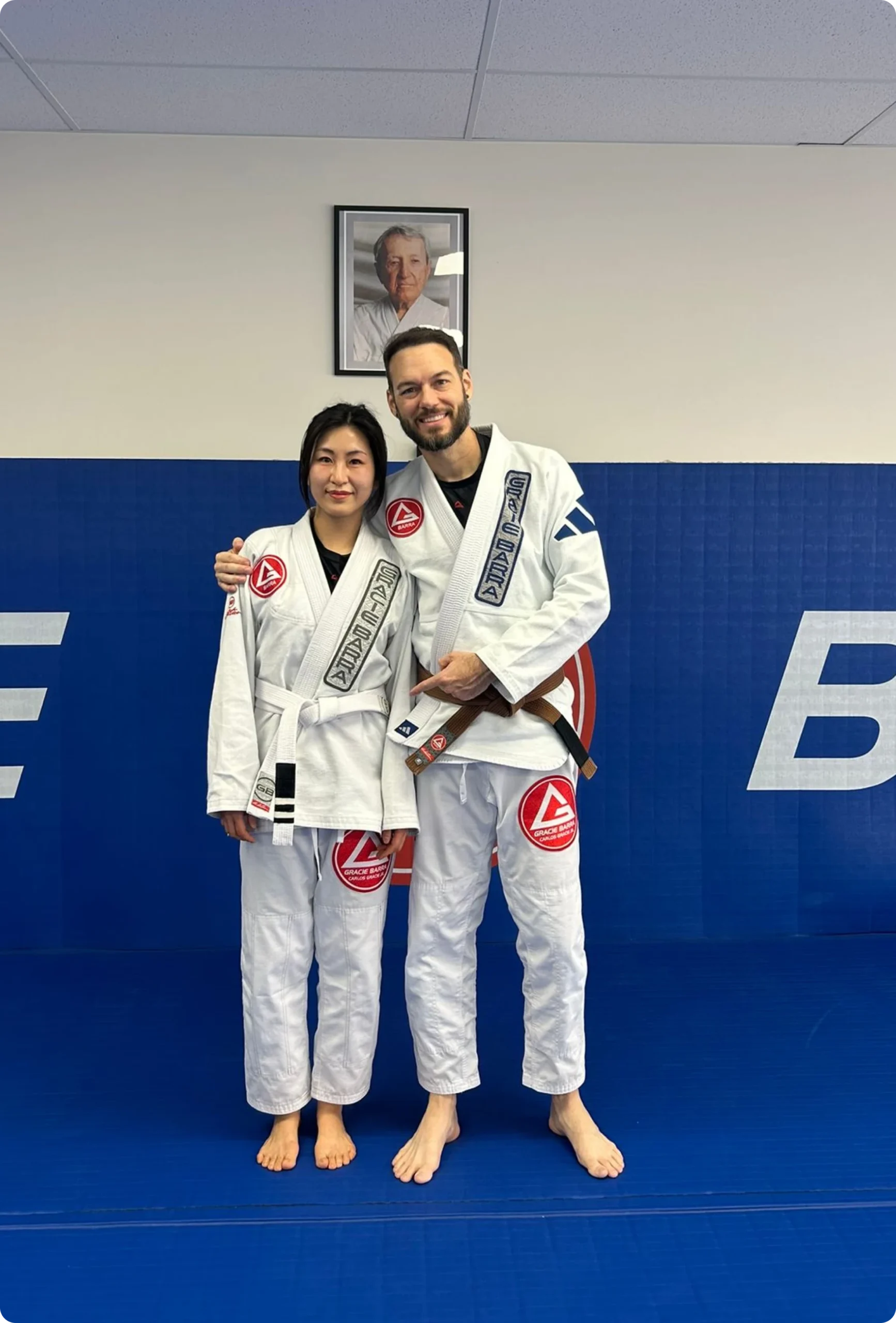
How Stand-Up and Ground Fighting Start to Connect
After a few months, many people notice the two arts begin to inform each other. Muay Thai teaches you to read distance and see strikes coming. Jiu-jitsu teaches you what to do once that distance closes and someone is holding on. Over time, stand-up and ground fighting stop feeling like separate subjects.
You do not need to force that connection early. Learn each art on its own terms and let the overlap show up on its own. If you train mainly to relieve stress and build confidence as an adult, having two kinds of class to choose from can also make it easier to show up after a long day.
DISCOVER Gracie Barra Guildford
CLICK HEREIs Training BJJ and Muay Thai Together Right for You?
Training BJJ and Muay Thai together works well for beginners who have the time and accept slower early progress in each art. If your schedule is tight, starting with one and adding the other later is just as valid, and often less frustrating.
A useful next step is to try a class of each at Gracie Barra Guildford and notice which one you leave wanting more of. Then talk with the coaches about a weekly mix that fits your life, instead of committing to a plan before you have felt either art on the mat.